Rheumatoid arthritis can progress in stages, starting with early joint inflammation and, in severe cases, leading to joint damage or loss of movement. Not everyone moves through all four stages, and early treatment can help slow or prevent long-term damage.
If you have joint pain, swelling, stiffness, or symptoms that are getting worse, visiting one of Sage Health’s primary care centers can help you get evaluated and connected to the right care.
What Is Rheumatoid Arthritis
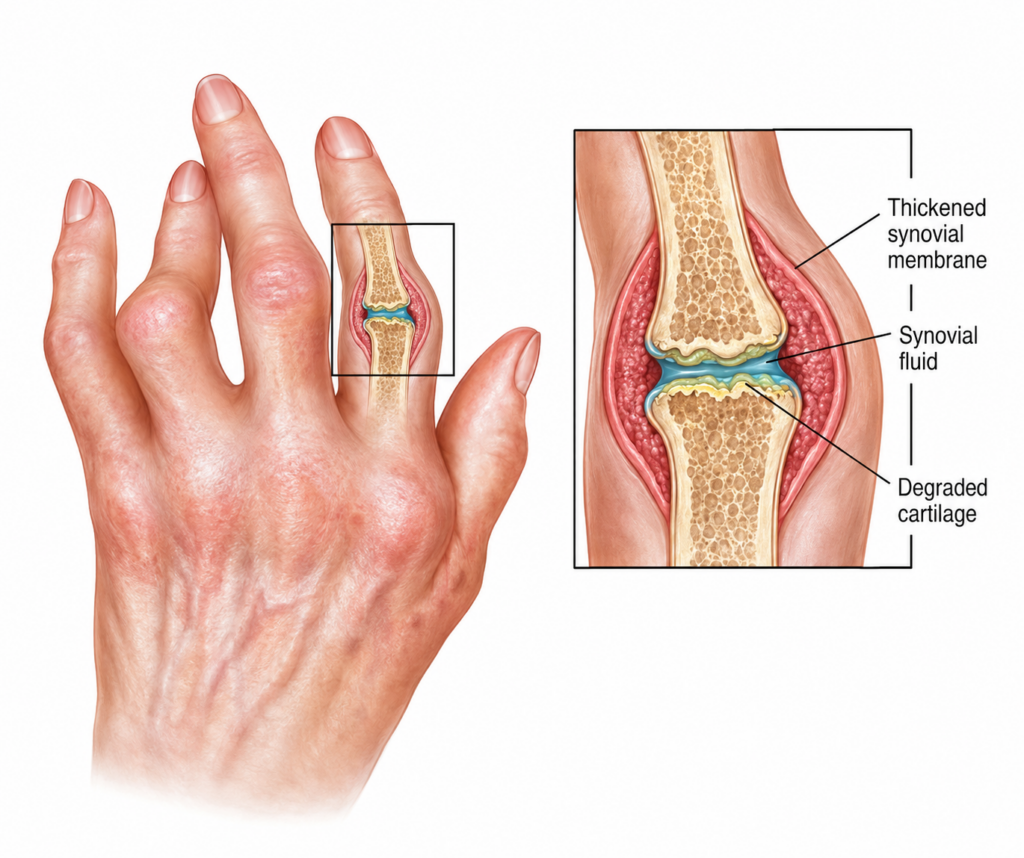
Rheumatoid arthritis, often called RA, is a chronic autoimmune disease. This means the immune system mistakenly attacks healthy tissue, especially the lining of the joints. RA commonly causes pain, swelling, stiffness, and tenderness, often affecting the same joints on both sides of the body, such as both hands, wrists, knees, ankles, or feet.
Unlike everyday joint pain or wear-and-tear arthritis, rheumatoid arthritis can affect more than the joints. In some people, it can also involve the skin, eyes, lungs, heart, or other parts of the body.
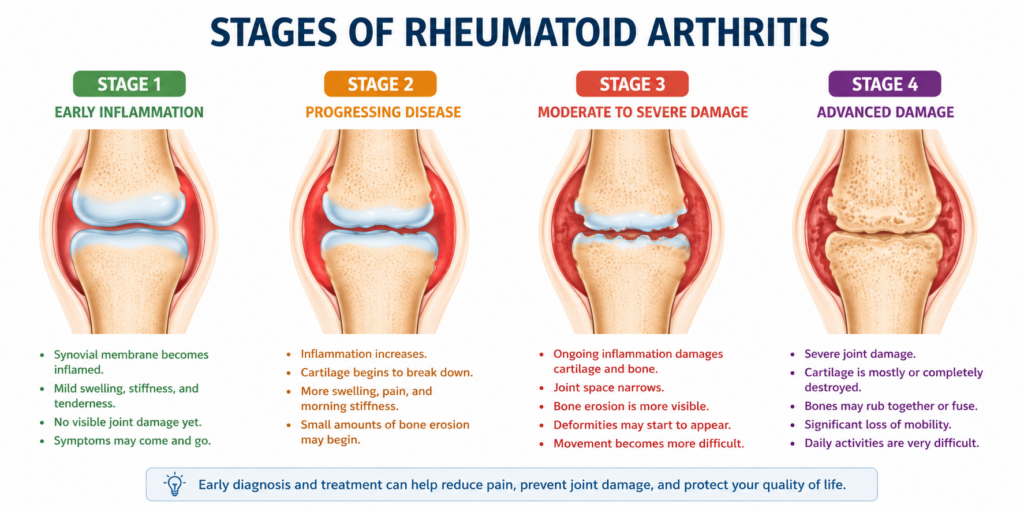
Below we have listed the 4 Stages of Rheumatoid Arthritis and what they are.
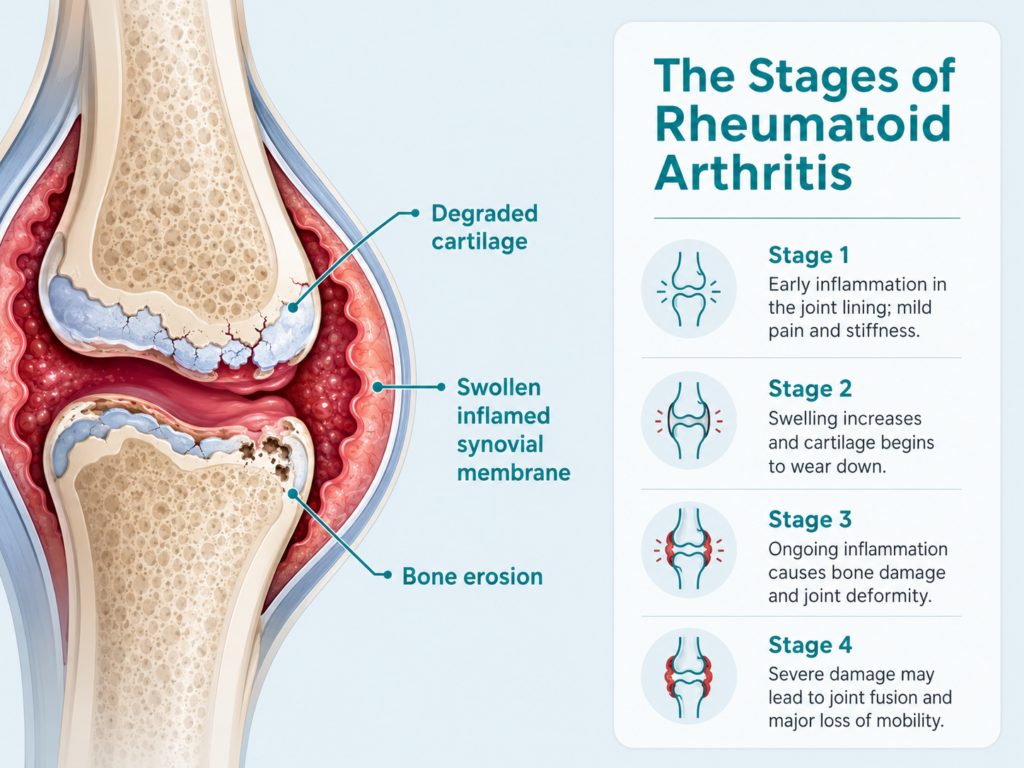
Stage 1: Swelling and Early Inflammation
In stage 1 rheumatoid arthritis, inflammation starts in the tissue around the joint. You may notice mild pain, stiffness, swelling, or tenderness, especially in the morning or after sitting for a long time. At this stage, X-rays may not show joint damage yet, which is why early symptoms should not be ignored.
Stage 2: Cartilage Damage and More Stiffness
In stage 2 rheumatoid arthritis, inflammation begins to damage the cartilage, which helps cushion the joints. Symptoms may become more noticeable, including increased swelling, stiffness, and reduced range of motion. Some people may also begin to see clearer signs of RA on imaging or blood work during this stage.
Stage 3: Bone Damage and Joint Changes
In stage 3 rheumatoid arthritis, inflammation becomes more severe and can start damaging the bone. Pain, stiffness, and mobility problems may become harder to manage. Some people may also notice visible joint changes, such as fingers or joints becoming bent or misshapen.
Stage 4: Joint Fusion and Loss of Mobility
Stage 4 rheumatoid arthritis is the most advanced stage. In this stage, inflammation may slow down, but the joint damage continues. Joints may become severely stiff, painful, swollen, or difficult to move. In some cases, bones may fuse together, which can lead to major loss of mobility.
Table of the 4 Stages of Rheumatoid Arthritis
Stage
What Happens
Common Signs
Stage 1: Swelling and Early Inflammation
Inflammation begins in the joint lining
Mild pain, stiffness, swelling, tenderness
Stage 2: Cartilage Damage
Inflammation starts damaging cartilage
More stiffness, swelling, reduced range of motion
Stage 3: Bone Damage
Inflammation damages bone and joint structure
More pain, visible joint changes, mobility loss
Stage 4: Joint Fusion
Severe joint damage may lead to fusion
Severe stiffness, loss of movement, daily activity challenges
Table for the 4 stages of rheumatoid arthritis
How to Diagnose Rheumatoid Arthritis
Rheumatoid arthritis is usually diagnosed through a combination of medical history, symptoms, physical exam, blood tests, and imaging. A provider may ask about morning stiffness, swelling, pain on both sides of the body, fatigue, and how long symptoms have been present.
Blood tests may look for inflammation and antibodies linked to RA, such as rheumatoid factor, anti-CCP antibodies, ESR, and CRP. Imaging tests like X-rays, ultrasound, or MRI may also be used to look for joint inflammation or damage.
A primary care provider can be a good starting point if you have joint symptoms. They can evaluate your symptoms, order initial tests when appropriate, and refer you to a rheumatologist if specialized care is needed.
How to Know if Your Rheumatoid Arthritis Is Progressing
Your rheumatoid arthritis may be progressing if symptoms become more frequent, last longer, or interfere more with daily life. Warning signs can include worsening joint pain, more swelling, longer morning stiffness, reduced range of motion, increased fatigue, or new visible changes in the joints.
You should also tell your provider if you develop symptoms outside the joints, such as shortness of breath, red or painful eyes, or unusual fatigue. RA can sometimes affect other parts of the body, so changes should be reviewed instead of ignored.
How Your Rheumatoid Arthritis Treatment Plan with Sage Health Prevents Disease Progression
Rheumatoid arthritis care works best when it is proactive. The goal is not only to reduce pain, but also to protect the joints, maintain movement, and reduce the risk of long-term damage. Cleveland Clinic notes that treatment focuses on reducing joint pain and swelling, maintaining or improving function, and slowing or stopping joint damage.
A Care Plan Built Around You
At Sage Health, primary care is designed to support your overall well-being with personalized care, chronic condition management, preventive care, and lifestyle guidance. For someone with rheumatoid arthritis, that can mean regular check-ins, symptom tracking, medication reviews, lab testing, and help understanding when symptoms need closer attention.
Coordinated Care When You Need It
RA often requires a team approach. Sage Health primary care doctors develop care plans, provide medical care, and coordinate specialty care when needed. Sage Health also offers condition-specific care pathways for arthritis and other chronic conditions.
That coordination matters because RA treatment may involve a rheumatologist, medications, physical therapy, lifestyle support, and monitoring for related health concerns. Sage Health can help keep those pieces connected so patients do not feel like they are managing everything alone.
Support Beyond the Appointment
Sage Health also offers care concierge support, including help scheduling outside care and making sure doctors stay on the same page. Some patients may also benefit from wellness resources like nutrition support, fitness classes, and social programs that support healthy aging.
If you are living with arthritis symptoms or need help managing rheumatoid arthritis, visit Sage Health’s primary care centers. To get started, you can also become a patient or contact us for more information.
Final Thoughts
The 4 stages of rheumatoid arthritis move from early swelling and inflammation to cartilage damage, bone damage, and, in severe cases, joint fusion. The earlier RA is recognized and treated, the better the chance of protecting joint function and maintaining quality of life.
If joint symptoms are affecting your daily routine, Sage Health can help you take the next step with senior-focused primary care and coordinated chronic condition support.
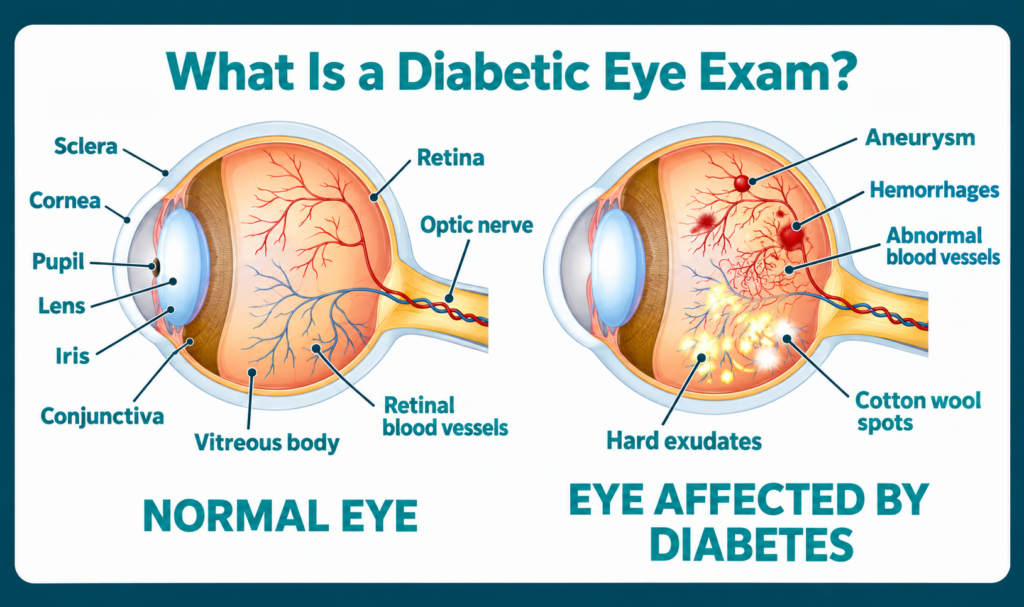
A diabetic eye exam is an important screening that checks for diabetes-related eye problems, especially diabetic retinopathy. Diabetic retinopathy happens when diabetes damages the small blood vessels in the retina, the light-sensitive tissue in the back of the eye. It can lead to vision loss if it is not found and treated early. This exam […]
A diabetic eye exam is an important screening that checks for diabetes-related eye problems, especially diabetic retinopathy. Diabetic retinopathy happens when diabetes damages the small blood vessels in the retina, the light-sensitive tissue in the back of the eye. It can lead to vision loss if it is not found and treated early. This exam […]
Geriatric care is healthcare designed for older adults. It focuses on the full picture of aging, including chronic conditions, medications, mobility, memory, independence, safety, and quality of life. Unlike general care that may focus on one issue at a time, geriatric care looks at how different health needs connect. It can be especially helpful for […]
The Standard Approach to Primary Care Visits For many older adults, primary care is often built around a yearly checkup or annual wellness visit. Medicare Part B covers a yearly “Wellness” visit once every 12 months for eligible patients, and this visit is meant to help create or update a prevention plan based on current […]