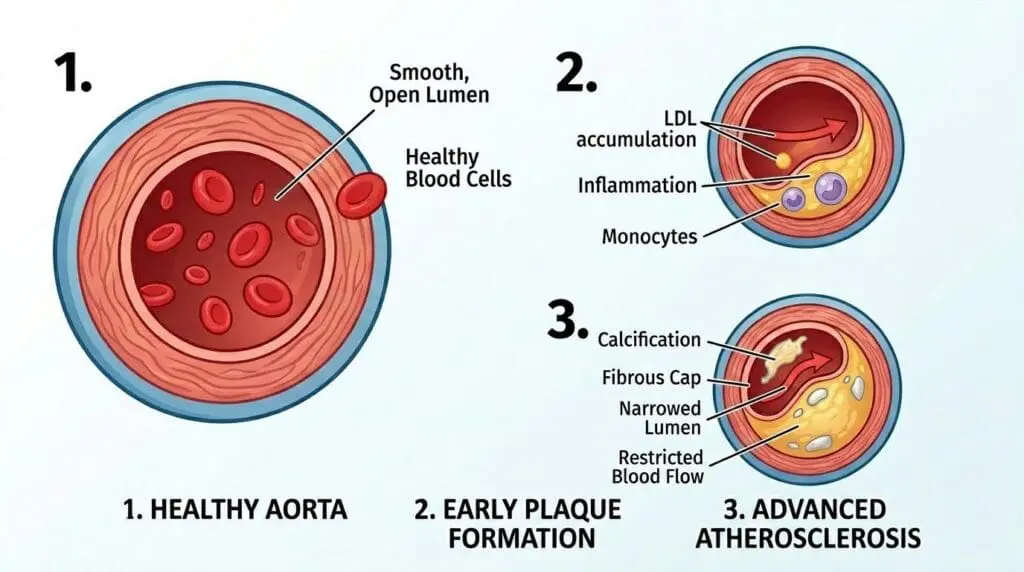
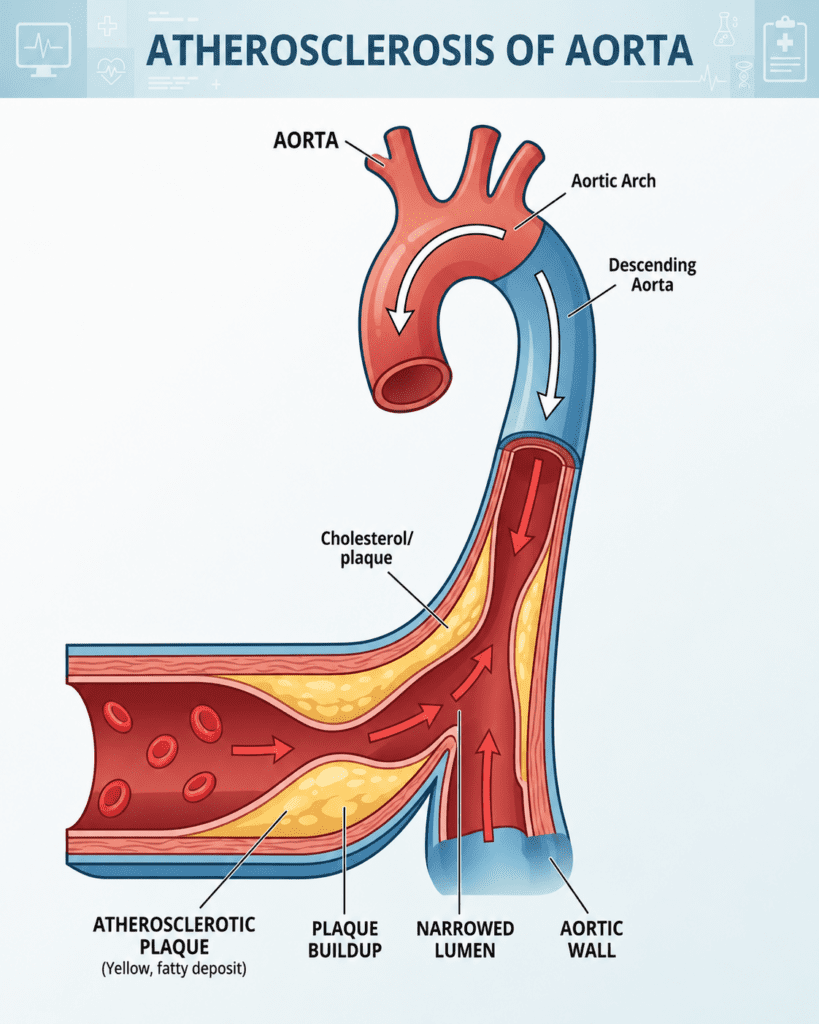
Atherosclerosis of the aorta is a condition where plaque builds up in the walls of the aorta, the largest artery in your body. This plaque is made up of fat, cholesterol, and other substances that harden over time and narrow the artery. Atherosclerosis of the aorta is more commonly known as “hardening of the arteries”.
Because the aorta carries oxygen-rich blood from your heart to the rest of your body, this buildup can affect circulation and overall heart health.
Understanding atherosclerosis of the aorta is important, especially since it often develops slowly and without obvious symptoms at first.
If you have concerns about your heart health, visiting one of Sage Health’s primary care centers can help you get evaluated early. Sage Health has cardiologists in their centers that work alongside the primay care physicians in managing heart health.
How Serious Is Atherosclerosis of the Aorta
Atherosclerosis of the aorta, can be serious, depending on how advanced it is.
In the early stages, it may not cause noticeable problems. But as plaque builds up, it can restrict blood flow and increase the risk of serious conditions like:
Heart attack
Stroke
Aortic Aneurysm (weakening of the artery wall)
Because of these risks, atherosclerosis of the aorta should be taken seriously and managed with the help of a healthcare provider. To find out more information and if you need to be treated for atherosclerosis of the aorta contact Sage Health
Symptoms of Aortic Atherosclerosis
One of the challenges with this condition is that symptoms of aortic atherosclerosis may not appear right away.
When symptoms do occur, they can include:
Chest pain or pressure
Shortness of breath
Fatigue
Pain in the legs or arms (due to reduced blood flow)
Dizziness or weakness
In some cases, symptoms only show up when the condition becomes more advanced. That’s why regular checkups are important, especially if you have risk factors like high blood pressure, high cholesterol, diabetes, or are a smoker or vaper
How to Prevent Atherosclerosis
If you’re wondering how to prevent atherosclerosis, the good news is that many risk factors are manageable through lifestyle changes.
Here are some key ways to reduce your risk:
Eat a heart-healthy diet (low in saturated fats and processed foods)
Stay physically active
Maintain a healthy weight
Avoid smoking or vaping
Manage stress
Keep blood pressure and cholesterol under control
Preventive care plays a big role here. A provider atSage Health’s primary care centers can help you build a plan tailored to your needs.
How to Treat Atherosclerosis
The treatment for Atherosclerosis depends on the severity of the condition.
Medications to lower cholesterol or blood pressure
Blood thinners to reduce clot risk
Medical procedures in more advanced cases
Treatment focuses on slowing the progression of plaque buildup and reducing the risk of complications.
FAQ about atherosclerosis
Is Atherosclerosis Hereditary
Genetics can increase your risk, especially if heart disease runs in your family. However, lifestyle factors like diet, exercise, and smoking habits play a major role.
Does Exercise Reverse Atherosclerosis
Exercise may not completely reverse plaque buildup, but it can slow progression, improve circulation, and strengthen your heart. Regular physical activity is one of the most effective ways to manage the condition.
How Can Angioplasty Resolve Hypertension and Atherosclerosis
Angioplasty is a procedure that opens narrowed arteries using a small balloon, sometimes placing a stent, to keep the artery open. This can improve blood flow and reduce strain on the heart, which may help alleviate symptoms and complications associated with both high blood pressure and atherosclerosis.
Yes. Smoking can cause clogged arteries by damaging the blood vessels, increasing inflammation, raising blood pressure, and making it easier for plaque to build up inside the arteries. Over time, this plaque can narrow the arteries and reduce blood flow to the heart, brain, legs, and other parts of the body. Many people ask, “does […]
Yes. Smoking can cause clogged arteries by damaging the blood vessels, increasing inflammation, raising blood pressure, and making it easier for plaque to build up inside the arteries. Over time, this plaque can narrow the arteries and reduce blood flow to the heart, brain, legs, and other parts of the body. Many people ask, “does […]
Yes, vaping may contribute to artery problems over time. E-cigarettes and vape products can affect the lining of your blood vessels, increase inflammation, raise blood pressure, and make arteries less flexible. These changes may increase the risk of plaque buildup, blood clots, and cardiovascular disease. Vaping is often marketed as less harmful than traditional smoking, […]
Guide to Cardiology Getting older comes with unique health considerations, and heart health is among the most important. Cardiology is the medical field dedicated to the heart and circulatory system – in simple terms, it is the study and care of the heart. In this comprehensive guide to cardiology, we’ll explain key concepts in senior-friendly […]